Tag: BirdWatching

  • The “Pigeon Walk” Experience: How a Joke About Pigeons Became a Volunteering Award in Conservation

    The “Pigeon Walk” Experience: How a Joke About Pigeons Became a Volunteering Award in Conservation

    Like many questionable ideas, the Pigeon Walk began as a joke.

    During the Covid-19 pandemic, when opportunities to explore were largely confined to the local neighbourhood, I found comfort in urban birdwatching. Already a keen nature photographer, I began documenting local pigeons, recording variations in their plumage and giving them pet names based on their distinctive characteristics.

    Giving Pigeons a Second Look

    At one point, I joked about standing outside V&A Dundee with a placard advertising a “Pigeon Walking Tour”. I didn’t expect the idea to go any further. Then RSPB Scotland approached me about collaborating on an event for the Dundee Science Festival, and my immediate answer was “yes!”.

    No longer was photographing and documenting local pigeon colour morphs just an idle hobby. It became an opportunity to explore a bigger question: what if pigeons could be a gateway bird to urban birdwatching and a deeper connection with nature?

    Designing the Experience

    The challenge was turning that idea into something people could actually do.

    I created a guided walking tour map and brochure, featuring illustrations by local artist Susan Kruegar of Sterling Notions that encouraged people to explore Dundee, document local wildlife, and discover the remarkable variety hidden within its pigeon population.
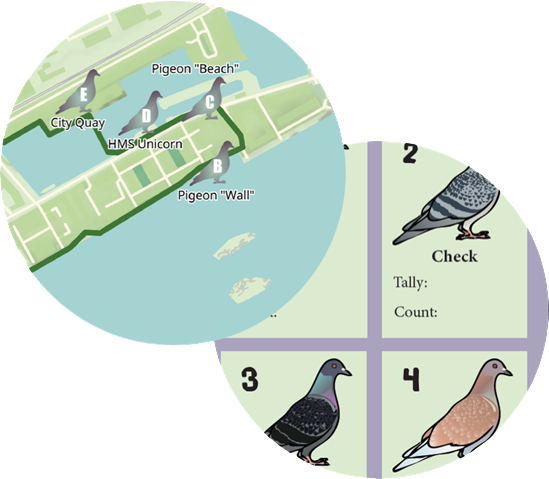
    Example graphics from Pigeon Walk brochure
    Example graphics from the Pigeon Walk brochure

    A Slight Obsession in Genetic Variation

    If pigeons don’t seem beautiful at first, look a little closer. Notice how their necks shimmer green and purple in the sunlight, especially during their gentle courtship displays. Then look beyond the iridescence. What first appears to be a flock of identical birds quickly reveals an extraordinary variety of colours, patterns and markings, shaped by pigeons’ long history alongside humans.

    Thousands of years of domestication and adaptation have left their mark on these birds, with every city developing its own unique mix of traits through breeding, chance and survival.
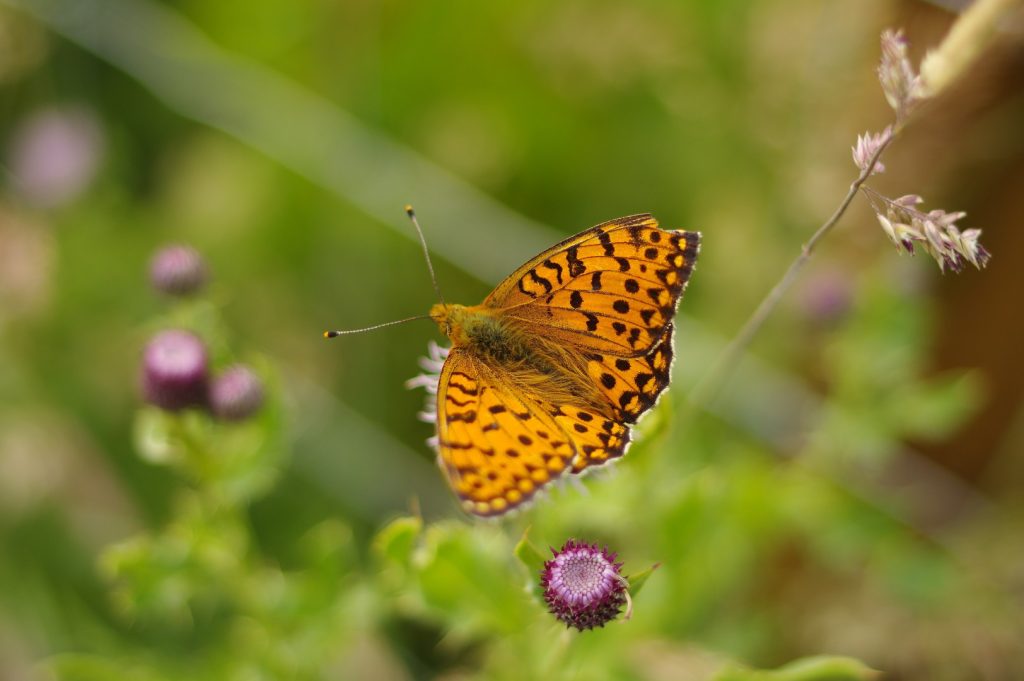
    Fritillary butterfly
    The Fritillary butterfly formed part of my research into genetic variation in metapopulation ecology.

    Perhaps it’s no surprise that I ended up cataloguing pigeon colour morphs. Earlier in my career, I completed an MSc in Bioinformatics, where my dissertation explored genetic variation in butterflies. I’ve always been captivated by the endless ways evolution, inheritance and chance create variety in the natural world. Pigeons simply brought that fascination a little closer to home.

    That fascination inevitably found its way into the Pigeon Walk.

    From Quirky Idea to Award

    The biggest surprise was that other people seemed to enjoy the idea as much as I did.

    In 2026, I was honoured to be awarded the Community Champion as part of the RSPB President’s Awards, recognising my volunteering efforts for my ongoing engagement with the Wild Dundee project.

    While the award recognised my wider volunteering, projects like the Pigeon Walk showed how creative ideas can help people connect with nature.
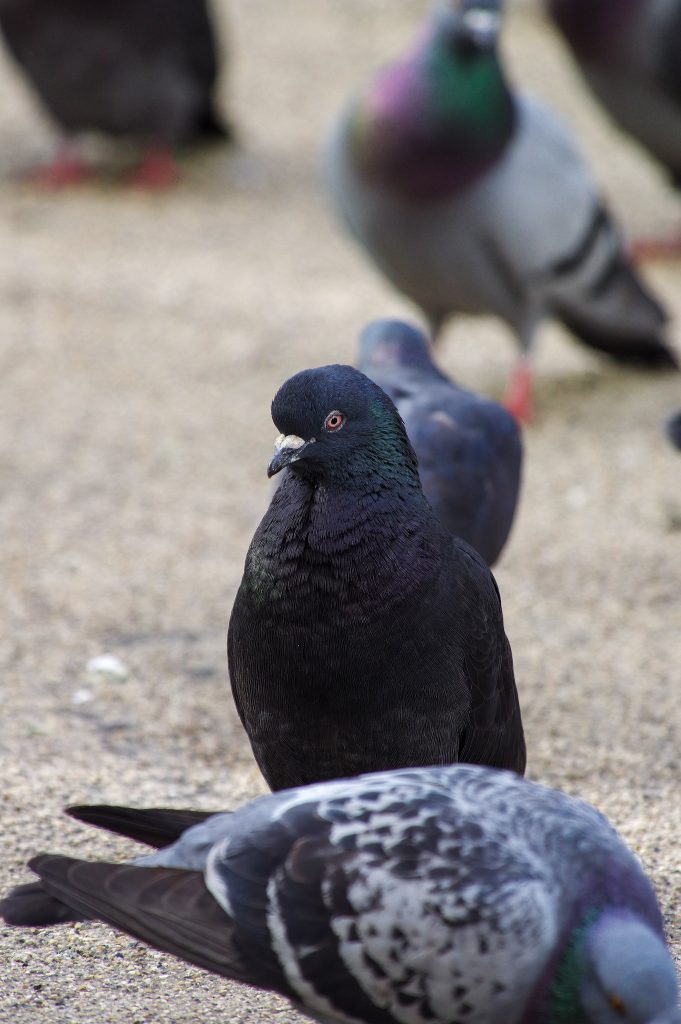
    'Bruiser' is a tall statured Glaswegian pigeon with the dark spread mutation
    ‘Bruiser’ is a tall statured Glaswegian pigeon with the dark spread mutation

    Pigeons themselves don’t really need our help – they’ve proven remarkably successful at adapting to the environments we’ve created. But they do offer something equally valuable: an accessible way for people to engage with nature.

    What I Learnt

    My key takeaway from designing the experience was that people genuinely sympathise with pigeons. Once I put myself out there, I discovered far more affection for these birds than the usual “rats with wings” stereotype would suggest.

    Acknowledgements

    What started as a joke, became a reality thanks to people believing in me. I’m grateful to RSPB Scotland’s Wild Dundee project for embracing an unconventional idea, and to Susan Krueger for bringing the brochure to life with her beautiful illustrations.

    I would also like to acknowledge the Dundee Science Centre for including the Pigeon Walk in its 2026 programme, my academic supervisors at Abertay University for their encouragement and everyone who engaged with the project either with the in-person or self-paced walking tour, or providing valuable feedback.

    Following the Columbidae Codex

    Further information on the Columbidae Codex can be found from the Substack newsletter.
  • Embracing AI for bird calls in this year’s Big Garden Bird Watch

    In recent years, I’ve become a regular participant in the RSPB’s Big Garden Birdwatch, contributing my citizen science data to help track the UK’s garden birds. This year I took a different approach – relying not just on my eyes, but using BirdNET-Pi, which harnesses AI to identify bird calls from audio, creating a richer picture of the birds in my neighborhood.

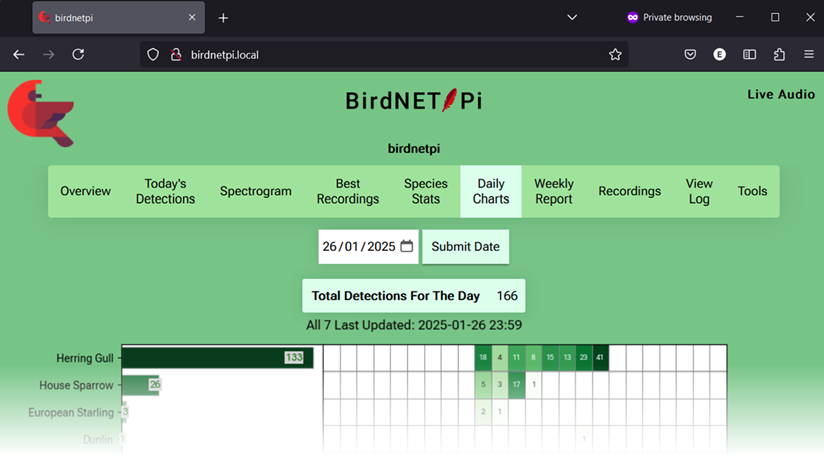
    BirdNET-Pi is an open-source project available on GitHub designed to run on a Raspberry Pi, a small and affordable computer. After setting up BirdNET-Pi, I can easily access a comprehensive dashboard via a web browser, where I can explore detailed information about the birds identified in my area from a microphone I snaked out my window.

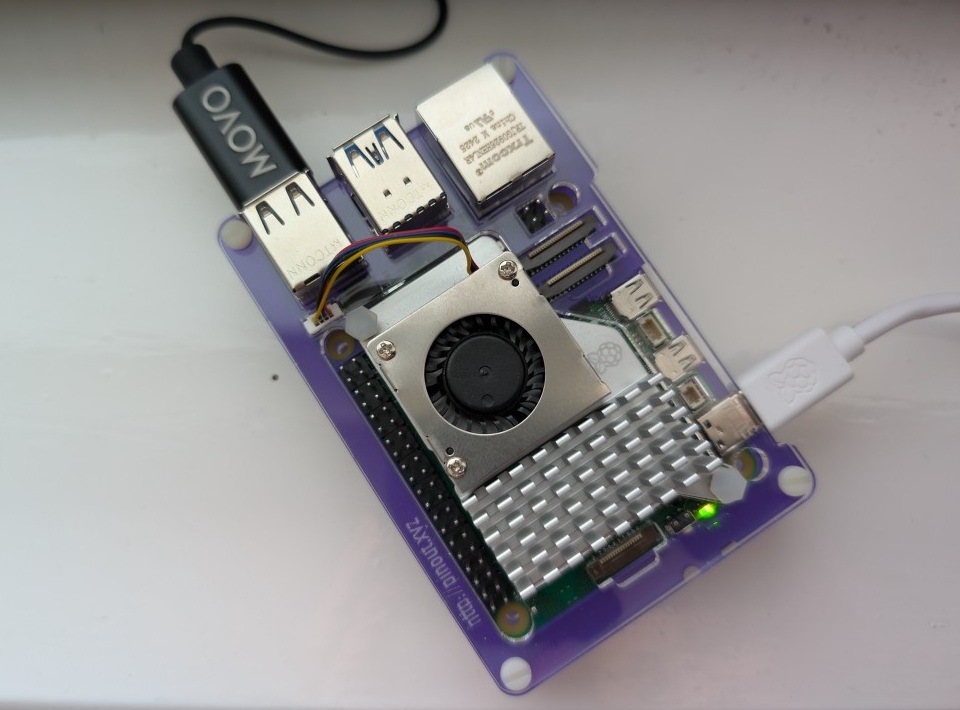
    The assembled Raspberry Pi 5 complete with Pibow case, active cooler and microphone attached to the USB port

    Whilst there are countless guides on how to set-up BirdNET-Pi, I thought I’d share the details of my configuration.

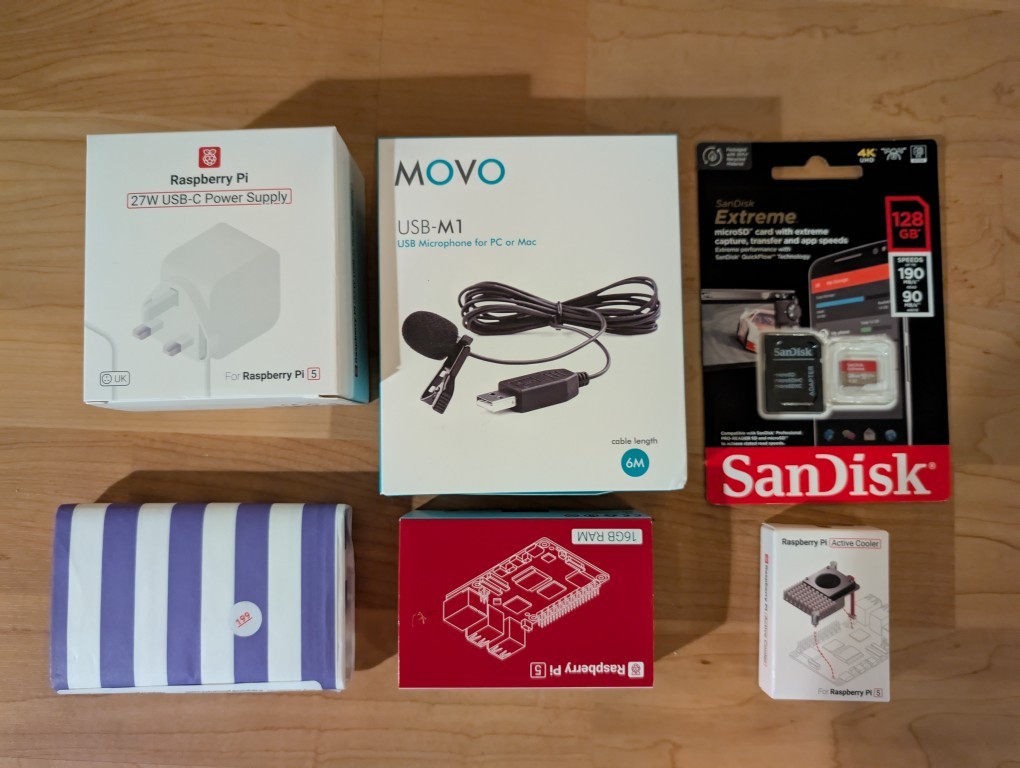
    The kit:

    • Raspberry Pi 5 (4GB model is fine, however I opted for 16GB)
    • Raspberry Pi 5 Active Cooler. To take the heat off crunching those chirps!
    • Raspberry Pi 5 USB-C power supply
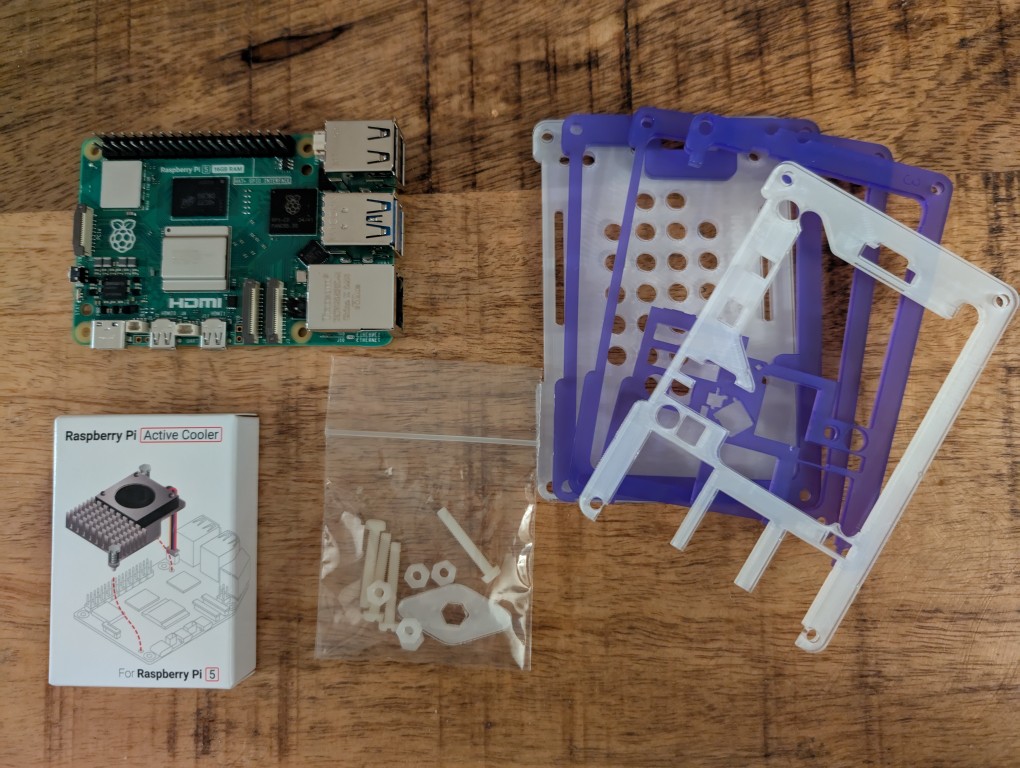
    • Pibow Raspberry Pi 5 case. Because it looks pretty cool and nicely fits around the active cooler.
    • SD card (for the OS image with ample capacity to store audio data – I purchased 128GB).
    • USB microphone (I purchased a Movo M1 USB Lavalier microphone, a relatively inexpensive option).
    Unboxing the Pi 5 – stage 1
    Unboxing the Pi 5 – stage 2

    The specific assembly instructions for the Pibow for Rasperry Pi 5 can be found at https://learn.pimoroni.com/article/building-your-pibow-5. The peripherals for Pi 5 can easily be swapped out for Raspberry Pi 4 (with the associated case, power supply and active cooler for 4).

    I’m going to skip straight to BirdNET-pi, as there are guides aplenty on how to set-up Rasperry Pi. However the official guide was enough to get up and running: https://www.raspberrypi.com/documentation/computers/getting-started.html.

    I installed BirdNET-Pi from a particular fork to ensure compatibility with the Raspberry Pi 5, which runs on the Debian Bookworm OS: https://github.com/Nachtzuster/BirdNET-Pi

    The installation worked without a hitch, perhaps a moments delay before the data began to flow in and I was able to locate my installation on my local network under birdnetpi.local.

    BirdNET-pi has support for Apprise – a notification library that can be configured under via the Settings menu. For example, I subscribed to MQTT (a type of message broker) to join a community network of BirdNET-Pi devices in my locality, enabling us to share bird detection data and collaborate on monitoring local bird populations.

    BirdNET-pi in action!

    So how about the Big Garden Bird Watch results? Herring Gulls, House Sparrows and Starlings amongst the most numerous detections were of no surprise. Undetected by BirdNET-pi were my more silent avian neighbours, a flock of Feral Pigeons and a pair Carrion Crows. However a couple of detections BirdNET-pi made irrespective of what I saw included the Eurasian Oystercatcher, Dunlin and Common Goldeneye. Oystercatchers and dunlins are regulars in my neighborhood, but I’ve never spotted a Goldeneye -though the audio recording sounded legit! And my most counted bird? The feral pigeon!

    Not only was this is a novel way for doing the Big Garden Bird Watch this year, the motivation to get my own kit came after learning about the Dundee Bionet, a network of acoustic bird detectors spread across green spaces and community gardens in Dundee.

    This is only just the beginning of my foray into bird audio data – stay tuned for what projects take flight next!